
What Is Aluminum Oxide and How Long Does the Finish Last?
An aluminum oxide finish is a clear, factory-applied floor coating made by mixing finely ground aluminum oxide, a mineral that ranks just below diamond on the Mohs hardness scale, into UV-cured urethane. The particles make the finish much harder to wear through than standard polyurethane, which is why it is used on so many prefinished hardwood and laminate floors. Aluminum oxide is also called alumina.
What is Aluminum Oxide?
What exactly is aluminum oxide? Aluminum oxide is a naturally occurring mineral found in nature as the mineral corundum. It is a chemical compound consisting of aluminum and oxygen atoms. In its crystalline form, it manifests as ruby or sapphire gemstones. Besides flooring finishes, this mineral is utilized in the production of metallic aluminum and various types of industrial glass.
Properties of Aluminum Oxide
Aluminum oxide is prized in manufacturing because of specific physical traits that translate directly to floor protection:
Extreme Hardness: It ranks just below diamonds on the Mohs hardness scale, providing high compressive strength.
Abrasion Resistance: Its ability to withstand friction makes it a primary ingredient in industrial sandpaper.
Chemical Inertness: It is biologically inert and resistant to oxidation, meaning it does not degrade or react when exposed to household chemicals.
Thermal Stability: It has high resistance to heat and thermal shock.
How Aluminum Oxide is Produced
Most industrial aluminum oxide is produced through the Bayer process. This chemical method involves refining bauxite ore to extract pure alumina. The ore is dissolved in sodium hydroxide at high temperatures, filtered to remove impurities, and then heated in a kiln to create the white powder used in flooring finishes. This process ensures the material reaches the high level of purity and hardness required for protective coatings.
Why Use Aluminum Oxide in Flooring?
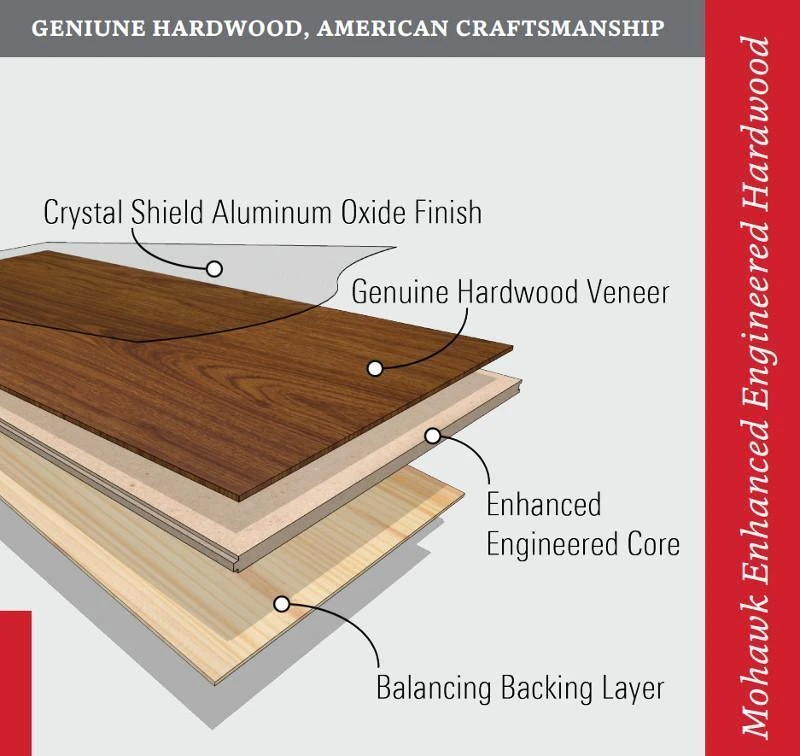
Aluminum oxide is ground into a fine powder and mixed into the UV-cured urethane finishes that manufacturers apply at the factory to many prefinished hardwood and engineered hardwood floors, and it reinforces the clear wear layer on many laminate floors. Once cured, the particles form a hard layer that protects against scuffs, foot traffic and everyday wear. Many manufacturers add it to the base coats as well as the top coat, so the finish resists wearing through to bare wood for longer. Before aluminum oxide, factory floors used a standard polyurethane finish without the mineral, and before that, hardwood flooring was typically oil-finished.
Aluminum Oxide vs. Polyurethane and Oil Finishes
Aluminum oxide is not a finish on its own. It is an additive inside a urethane finish, so the useful comparison is between the finish types a shopper actually chooses between.
| Finish | Where it is applied | Wear-through resistance | Scratches and repairs | Look | How it is renewed |
|---|---|---|---|---|---|
| Aluminum oxide (UV-cured urethane with aluminum oxide) | At the factory, on prefinished floors | Highest | Fine scratches can still show; small scratches cannot be spot-repaired | Clear, consistent sheen from matte to gloss | Abrade and recoat, or sand and refinish on floors with enough wear layer |
| Standard UV-cured urethane or ceramic finish | At the factory, on prefinished floors | High | Similar to aluminum oxide; easier to abrade for a recoat | Clear, consistent sheen | Screen and recoat, or sand and refinish |
| Site-finished polyurethane (oil- or water-based) | On site, after the floor is installed and sanded | Moderate | Easiest to screen and recoat; color chosen after install | Can be customized on site | Screen and recoat, or sand and refinish |
| Penetrating oil or hardwax oil | At the factory or on site | Lowest; needs regular re-oiling | Scratches can be spot-repaired and blended in | Natural, low-sheen, matte | Re-oil without sanding |
[VERIFY: the relative ratings reflect manufacturer and industry guidance rather than a single standardized test; confirm Georgia Carpet is comfortable stating them before publishing]
Does Aluminum Oxide Finish Affect Appearance?
An aluminum oxide finish amplifies the grain patterns and enhances the aesthetics of the wood while providing a surface resistant to scratches. The clear finish lets the grain of each plank show through, bringing out its character and depth so you are ensured beauty and strength. UV protection is another benefit of this flooring finish. The vibrant color and sheen of a new floor tend to fade over time due to exposure to UV rays coming in through windows, doors, and skylights. Wood protected with aluminum oxide fades slowly, preserving the original look for an extended period of time.
How Long Does Aluminum Oxide Last?
A factory aluminum oxide finish typically lasts 20 to 25 years in a home before the floor needs refinishing, about twice as long as a site-applied polyurethane finish, which usually lasts around 10 years. Most prefinished floors receive 5 to 10 coats at the factory, each cured under UV light. [VERIFY: the lifespan and coat figures all come from the current page; confirm them against manufacturer finish warranties and specifications before publishing] How long yours lasts depends on foot traffic, pets, grit tracked in from outside and how the floor is cleaned. Many manufacturers back the finish with a long warranty: Shaw EPIC Plus carries a lifetime residential finish wear warranty. When the finish does wear, a flooring professional can abrade and recoat it, or sand and refinish solid hardwood and engineered hardwood with a thick enough wear layer.
Georgia Carpet Industries carries a wide selection of flooring with an aluminum oxide finish. Call us at (800) 535-8789 or visit us in-store or online to request a quote.
Aluminum Oxide in Laminate, Vinyl and Engineered Hardwood
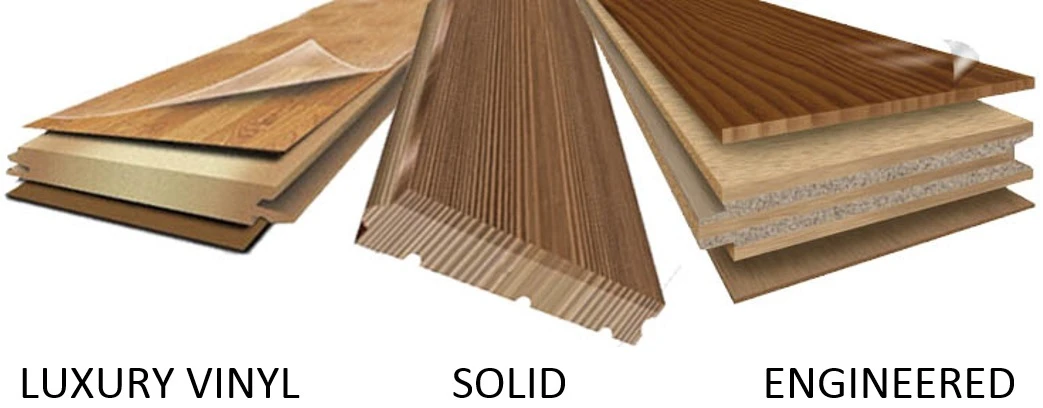
Engineered and solid hardwood: Much of today's prefinished hardwood ships with an aluminum oxide-fortified urethane finish. On engineered hardwood, the finish sits on a real wood veneer, so the veneer's thickness, not the finish, sets how many times the floor can be sanded and refinished. [VERIFY: confirm which in-stock engineered lines specify an aluminum oxide finish]
Laminate: Laminate's clear wear layer is a melamine overlay that is commonly reinforced with aluminum oxide particles. That is a large part of why quality laminate resists scratches from pets and furniture so well.
Luxury vinyl: Vinyl plank is protected by a clear PVC wear layer measured in mils, often finished with a urethane top coat. Some brands enhance that coat with aluminum oxide or ceramic beads for extra scratch resistance. When comparing luxury vinyl, check the wear layer thickness first and the coating second.
Other Applications of Aluminum Oxide
Because aluminum oxide is chemically stable and ranks high on the Mohs hardness scale, it is utilized across several major industries besides residential flooring:
Abrasives: It serves as the primary grit in industrial grinding wheels and high-performance sandpaper.
Electronics: Its high melting point and electrical insulation properties make it ideal for circuit board substrates.
Medical: The biocompatibility of the mineral allows it to be used in hip replacements and dental implants.
Water Filtration: It is used in treatment facilities to remove contaminants such as fluoride and arsenic.
Aluminum Oxide FAQs
Is aluminum oxide safe for my home and pets?
Yes. While it sounds like a harsh chemical, aluminum oxide is biologically inert. This means it does not react with other chemicals and is stable. Once cured on your floor, it provides a safe surface that does not off-gas harmful fumes, making it safe for children and pets.
Can I refinish a floor with an aluminum oxide finish?
This is the one trade-off for such extreme durability. Because the aluminum oxide finish is so hard (used industrially as an abrasive), it is difficult to sand off using standard home equipment. However, because the finish lasts 20-25 years, refinishing is rarely needed compared to older wood floors.
When the finish does need attention, a professional can abrade it and apply a bonding coat and fresh top coat without sanding to bare wood.
Why is aluminum oxide used in sandpaper and flooring?
Aluminum oxide is used in both sandpaper and flooring because of its high abrasion resistance. The same property that allows sandpaper to cut through wood allows your floor to resist the friction of shoes and furniture. It essentially creates a shield that protects the wood grain underneath from physical wear.
Is aluminum oxide finish better than polyurethane?
An aluminum oxide finish is a polyurethane finish, just a much harder one. Factories mix aluminum oxide into UV-cured urethane, so the coating resists wearing through far longer than polyurethane applied on site. Site-finished polyurethane has its own advantages: it is easier to screen and recoat, and you can choose the stain color after installation.
What are the pros and cons of aluminum oxide floor finish?
Pros: excellent wear-through resistance, no fumes or drying time in your home, a clear finish that holds its sheen, and long finish warranties. Cons: fine surface scratches still show, small scratches cannot be spot-repaired, recoating means abrading the surface first, and engineered floors with a thin wear layer can only be sanded a limited number of times.
Does an aluminum oxide finish scratch?
Yes, it can. Aluminum oxide makes a finish resist wearing through, but it does not make it scratch-proof. Grit, pet claws and furniture legs can still leave fine scratches, which show most on dark or glossy floors. Matte and wire-brushed finishes hide them best. Felt pads, trimmed pet nails and regular sweeping prevent most of them.
How can I tell if my floor has an aluminum oxide finish?
Start with the manufacturer's specification sheet or warranty, which usually names the finish. A prefinished floor with small beveled edges and an even factory sheen usually has a UV-cured urethane finish, and many brands add aluminum oxide to it. A floor sanded and finished in place, often with square edges, usually has site-applied polyurethane.
How do you clean a floor with an aluminum oxide finish?
Sweep or vacuum on a hard-floor setting, then clean with a pH-neutral hardwood cleaner sprayed onto a microfiber mop. Avoid wax, oil soaps, steam mops and wet mopping, which can dull the finish or push water into the seams. Follow your manufacturer's care guide, since the wrong products can void the finish warranty.
Where can I buy flooring with an aluminum oxide finish?
Aluminum oxide is applied at the factory, so you buy it already on the floor rather than in a can. Many prefinished engineered and solid hardwood floors, and many laminates, ship with it. Georgia Carpet carries prefinished hardwood from brands including Shaw, Mohawk, Bruce and Mullican; check each product's finish specification before you order. [VERIFY: confirm these four brands' in-stock lines specify an aluminum oxide finish]